


Record-Breaking Great White Spotted Near Popular U.S. Beaches This Summer — quick lead
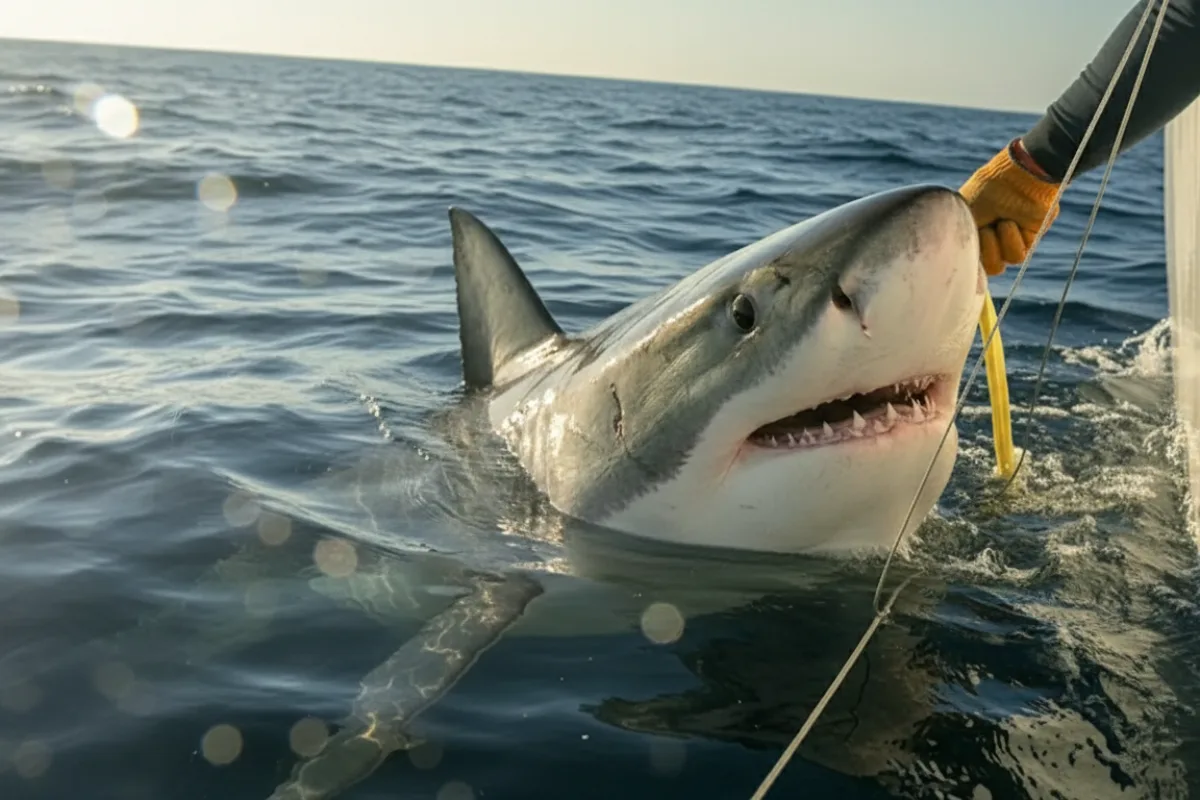
Record-Breaking Great White Spotted Near Popular U.S. Beaches This Summer: researchers tracking a 13.8-foot (4.6 m), ~1,653-lb male great white nicknamed Contender say the shark spent large stretches of this season close to popular shorelines from Florida up to Cape Cod and beyond, according to OCEARCH satellite tags and recent reporting.
The pattern has renewed discussion about beach safety, shark science, and how public tracking helps researchers and the public coexist with big predators.

Where the shark traveled — Florida, Pamlico Sound, Cape Cod and more
OCEARCH researchers first tagged Contender in January off the Florida–Georgia coast. Tracking pings show the animal lingered near Florida’s east coast, moved into Pamlico Sound (North Carolina) in spring and later appeared near Cape Cod and Nantucket in July — and most recently surfaced in Canada’s Jacques Cartier Passage. That movement explains multiple summer sightings and occasional close passes to recreational beaches.
How big is “record-breaking”? Male vs female size context
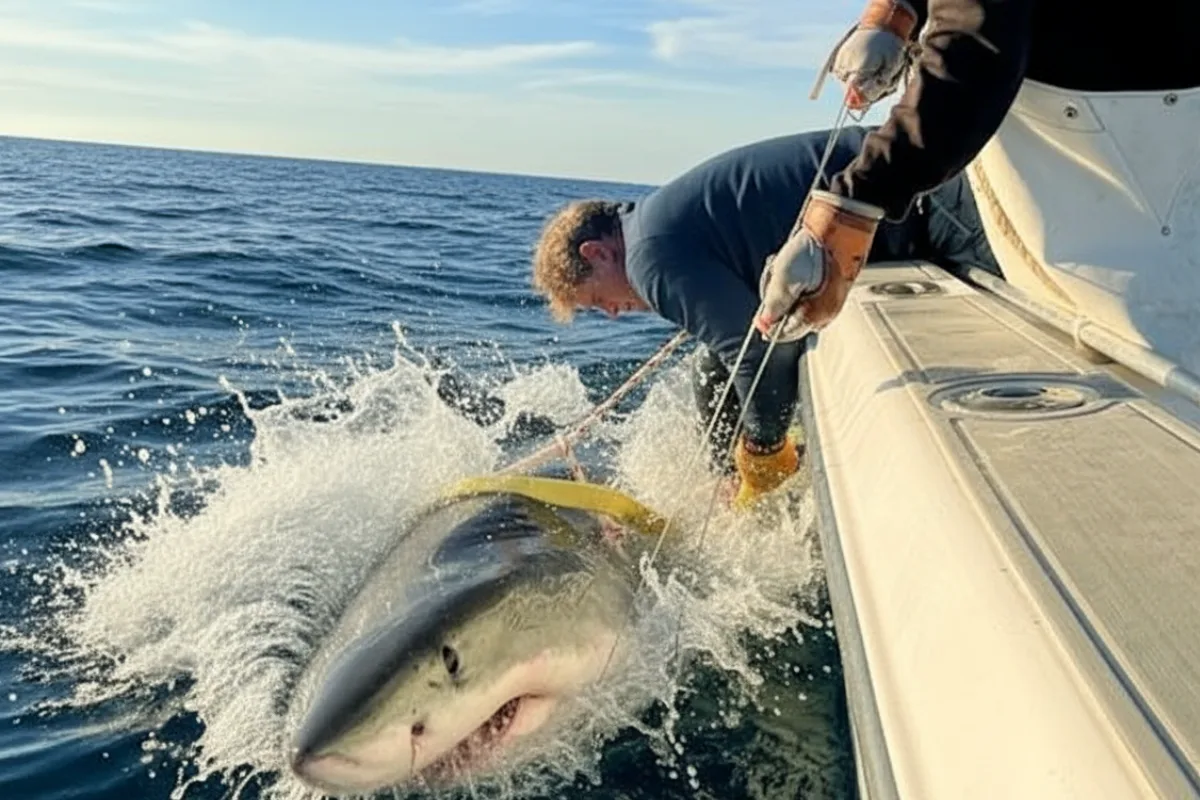
At roughly 13.8 ft (4.6 m) and an estimated 1,653 lb (750 kg), Contender is unusually large for a male great white in the Northwest Atlantic and is the largest male white shark OCEARCH has tagged in that region.
Scientists stress that female great whites commonly grow larger than males — top females have been recorded well over 15 ft — but Contender still ranks among the biggest individuals tracked this year.
Why the shark spent time near beaches — food, currents, migration
Marine scientists say great whites follow prey (seals, large fish) and favorable currents. This summer’s coastal movements — from Pamlico Sound north to Cape Cod and Nantucket — likely reflect prey availability and seasonal migration patterns. Tracking data often show sharks turning up near busy coastal waterways where seals and other prey gather.
Safety and local response — beach warnings, monitoring and what to do if you see one
Local authorities and institutes ramp up monitoring when a tagged large shark is nearby. Advice for swimmers and small-boat users:
- Obey local beach closures and lifeguard instructions.
- Avoid dawn/dusk swimming and areas with fishing or seals.
- If you spot a large shark, leave the water calmly and alert authorities; do not attempt to approach or photograph closely. Regional outlets and lifeguard services will post alerts when an animal is confirmed near shore.
What tracking teaches us — research benefits beyond headlines
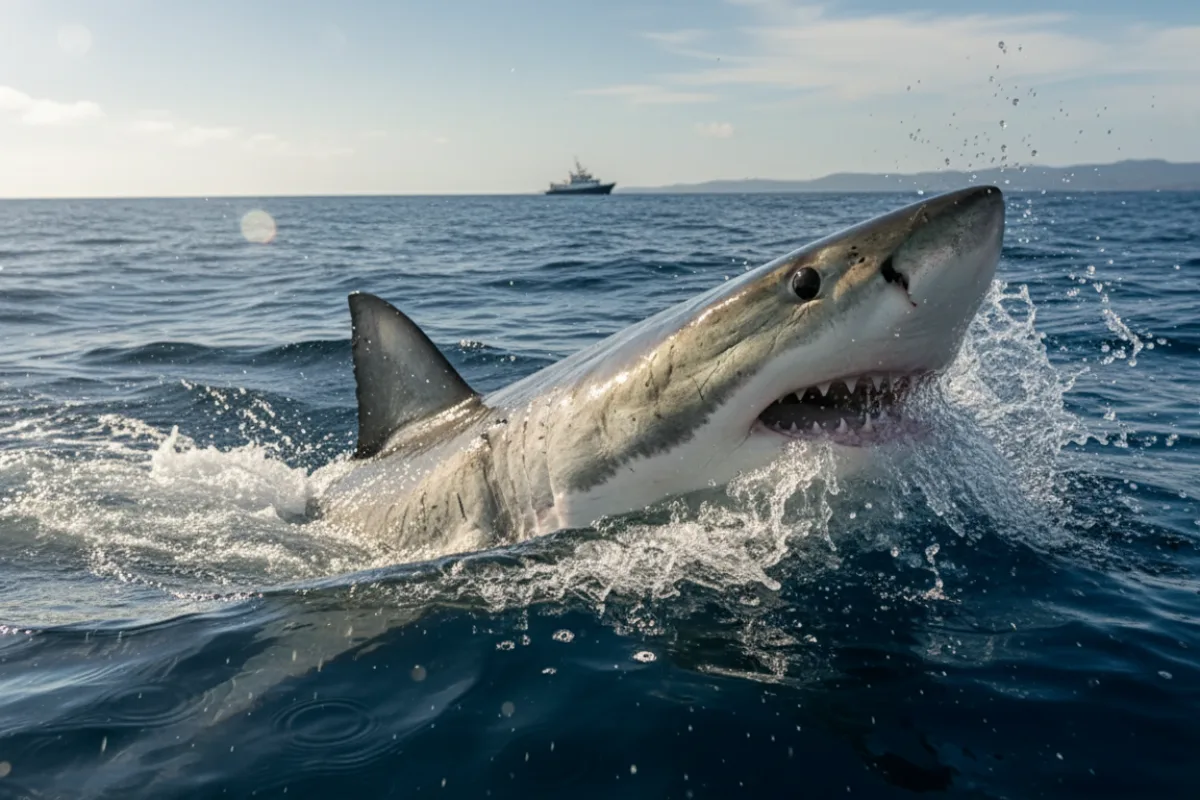
OCEARCH and partner scientists use tagging to learn diet, migration, reproductive health and ocean-wide movement patterns. Tags only transmit at the surface, so animals sometimes “disappear” between surface events; that’s normal and expected. The data help shape conservation measures and inform local safety messaging without promoting fear.
Quick expert note (quote from researchers & scientists)
“Contender is the largest male white shark ever caught, SPOT tagged, released and now studied in the NW Atlantic white shark population,” OCEARCH wrote after tagging. John Chisholm, an adjunct scientist at the New England Aquarium, reminded reporters that while this male is notably large, female great whites generally grow larger than males — context that helps people understand natural size variation.
Quick take: what beachgoers should remember today
- Large sharks move along coasts each year; a tracked animal near shore is a scientific opportunity and a reminder to exercise caution.
- Follow local advisories and avoid risky behaviors (isolated swimming, dawn/dusk water time).
Frequently Asked Questions
How big was the great white shark tracked this summer?
The tagged male — called “Contender” — measures about 13.8 ft (4.6 m) and is estimated at roughly 1,653 lb (750 kg).
Where was the shark spotted this summer?
Tracking shows the shark spent time off Florida’s east coast, Pamlico Sound (North Carolina), Cape Cod, near Nantucket and recently surfaced in Canada’s Jacques Cartier Passage.
Are beach closures likely because of this shark?
Beach closures depend on confirmed near-shore sightings and local authorities; follow lifeguard and municipal updates for the latest safety info.
Author note
I cover wildlife and science news with an emphasis on clear safety advice. This short report is based on OCEARCH tracking data and Gizmodo’s coverage; for local beach orders and closures always follow municipal lifeguards and official coastguard notices